
How Long Does Lean Stay in Your System? Detection Windows and Test Factors


Dr. Robert Thompson


- Codeine can be detected on urine tests 33 to 54 hours after codeine was administered, as determined in a controlled research study using broadly reactive opiate screening tests.
- Reliable lean-specific detection windows are not available for blood, saliva, or hair tests.
- Promethazine and codeine have different half-lives, meaning they do not leave a person’s body on the same timeline.
- Detection time may vary depending on hydration, kidney function, dose, frequency of codeine use, and the type of test performed.
- Seek immediate medical attention if you or someone else is breathing slowly or shallowly after using lean.
If you have a drug test coming up and you’ve recently used lean or know someone who has, it’s natural to be worried if it will show up on the test.
However, if you’re looking for a simple answer to how lean stays in your system, then unfortunately, there isn’t one. Lean is a mix of two drugs, and while drug tests aren’t built to identify it specifically, they will detect its components.
This guide explains what the research does and doesn’t tell us. We’ll cover how urine, blood, saliva, and hair tests work, what can change how long codeine stays detectable, and why promethazine runs on a different timeline. We’ll also cover what to do if lean use has started to feel hard to control.
What is Lean?
Lean commonly refers to the misuse of promethazine-codeine cough medicine, often mixed with soda or alcohol.[1] It is also known as “purple drank,” “sizzurp,” or “Dirty Sprite.”
Because lean is a combination of more than one active drug, its detection time cannot be reduced to a single universal number.
How the Half-Life Affects Lean Detection
Before understanding how long lean stays in your system, it’s worth understanding the role half-life plays in this process.
A half-life is the time required for the concentration of an active substance in the body to decrease by half. Codeine has a half-life of about 2.9 hours in blood, and approximately 90 percent of an oral dose is excreted through the kidneys within 24 hours.[2]
That does not mean drug tests become negative after one half-life or after 24 hours. Tests may detect codeine metabolites, and their cutoffs differ.
Promethazine follows a different timeline. It has an estimated half-life of 16 to 19 hours after oral or rectal use, with differences linked to individual metabolism.[3] This means a person may still have promethazine in their system after codeine concentrations have fallen. Standard opioid testing focuses on opioid compounds rather than determining whether someone consumed lean.
Lean Drug Tests by Sample Type
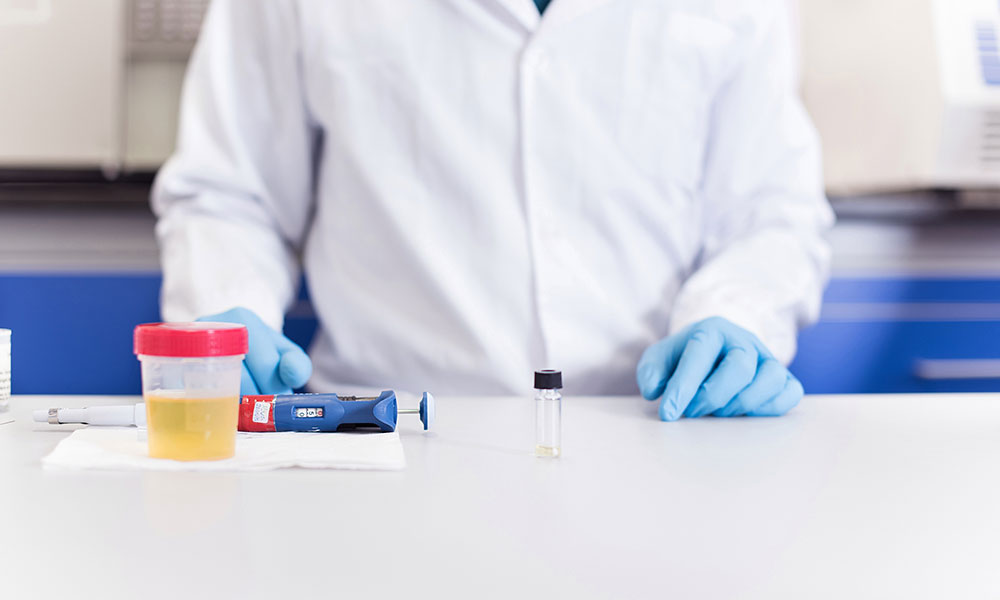
Common drug tests examine different specimens and may use different thresholds. Different tests may also target codeine or related opioid metabolites rather than identifying lean as a distinct substance.
- Urine: Controlled forensic testing found a mean detection time of 33 to 54 hours using opiate immunoassays with a 300 nanogram per milliliter cutoff. [4] This is the strongest specific estimate available, but it is not a guarantee for every urine test.
- Blood: No well-supported, lean-specific blood detection window is available. Plasma half-life is not the same as laboratory detection time, and searches for how long codeine stays in your system according to a blood test cannot be answered with one fixed number.
- Saliva: Detection windows vary by method, but saliva tests can detect codeine for about 1 to 4 days, and lean can be detected in saliva on a similar recent-use timeline. Testing methods, targets, and cutoffs vary across laboratories, so the testing laboratory should explain how a particular result is interpreted.
- Hair: Hair tests can detect codeine for up to 90 days, and lean may be detectable in hair over a similar period.
Standard opiate immunoassay tests can reliably detect codeine, morphine, and heroin, but they may miss several other opioids.[5] A negative test result does not necessarily rule out every type of opioid exposure.
Detection Windows and the Factors That Change Them
The length of time a substance is detectable depends on several factors beyond the time since the last dose.
Important factors include:
- How much was used and whether higher doses were taken
- Whether codeine use occurred once or repeatedly
- Kidney function and individual metabolism
- Hydration and urine concentration
- The specimen being tested
- The laboratory cutoff and confirmation method
- Time since the last dose
Trying to drink large amounts of water to dilute your urine does not work to change detection times. While it may lower the drug concentration, overly dilute urine will result in a flagged sample and a retest.[6]
Kidney function can also substantially affect how long codeine stays in a person’s system. One study reported that the half-life of codeine was about four hours in healthy volunteers and approximately 19 hours, with wide individual variation, among people receiving hemodialysis for end-stage kidney disease.[7] A licensed medical professional should interpret what that means for a specific person’s body.
Risks of Lean and When to Get Emergency Help
Lean is more dangerous than it can seem because both of its main drugs slow the body down. Codeine is an opioid, and misusing it can slow heart rate and breathing. Promethazine can add to that effect, since it can strengthen other drugs that depress the nervous system and breathing. Mixing lean with alcohol, benzodiazepines, or other opioids raises the risk even more.
Signs of an overdose can include:
- Slow, shallow, or stopped breathing
- Extreme sleepiness or being unable to wake up
- A limp body
- Blue or gray lips and fingertips
- Pinpoint pupils
- Gurgling or choking sounds
If you see these signs, call 911 right away. If naloxone is available, give it while you wait for help. Stay with the person and turn them onto their side to keep their airway clear.
Support for Opioid Use Concerns
A person worried about codeine use, cravings, or withdrawal symptoms does not have to figure out the right level of support without professional help. Abrupt changes in opioid use can raise questions about withdrawal symptoms and whether medical detox is right. Our admissions team is available to discuss your concerns and schedule an assessment.
If painkiller use is affecting your health or daily life, reach out to our team for a confidential conversation. We can explain the assessment process and discuss treatment options, with no judgment and no pressure.
Frequently Asked Questions About How Long Lean Stays in Your System

Schedule a Free and Confidential Consultation with Epiphany Wellness
 609-710-9423
 info@epiphanywellness.com