
How Long Does Tramadol Stay in Your System? Understanding Duration and Detection Times


Dr. Robert Thompson

- Tramadol is a synthetic opioid (man-made) and is used to treat moderate to severe pain, and comes as brand-name medications like Ultram and ConZip.
- The average half-life (the time it takes for the medicine’s active ingredient to drop by half in your bloodstream) of immediate-release tramadol is approximately 6 hours. Clearance of the medication can be prolonged with age, liver impairment, kidney impairment, and extended-release formulations.
- Urine testing typically detects tramadol for about 1 to 4 days post-dose.
- Blood testing and saliva testing tend to be able to demonstrate more recent use of tramadol.
- Hair testing can display a longer pattern of exposure to tramadol.
Tramadol is a prescription medication that is classified as a synthetic (man-made) opioid. The medication is prescribed to individuals who have chronic pain of such severity that it requires an opioid to manage the individual’s pain; however, there are other alternatives available to treat the individual’s pain. Brand name versions of this medication include Ultram and ConZip.[1]
The mechanism through which tramadol functions differs somewhat from those of other opioids. While tramadol binds to opioid receptors, as do other opioids, it also acts upon serotonin and norepinephrine. Serotonin and norepinephrine are neurotransmitters that play a role in mood regulation, pain modulation, and signal transmission within the central nervous system. The unique action of tramadol contributes to the medication’s ability to provide relief from pain, while at the same time creating potential risks of side effects that extend beyond typical opioid related side effects.[2]
Some of the common side effects associated with tramadol include nausea, dizziness, drowsiness, constipation, excessive sweating, headaches, and vomiting. Serious risks associated with tramadol include respiratory depression, overdose, seizure activity, serotonin syndrome, physical dependence, and withdrawal symptoms.
What Is the Tramadol Half-Life?
A drug’s half-life is the period of time needed for the concentration of an active ingredient in the bloodstream to reduce by 50 percent. In reference to immediate-release tramadol, research indicates that the average plasma elimination half-life is approximately 6 hours post-dosing with a single dose of medication, while repeat doses result in a plasma elimination half-life of approximately 7 hours.[3]
It should be noted that tramadol does not completely disappear from the body after 6 or 7 hours. As previously discussed, drugs typically take multiple half-lives to reach concentrations in the body that are below trace amounts. Additionally, tramadol undergoes metabolic processes resulting in metabolites. These metabolites contribute to the overall effect of tramadol. Specifically, O-desmethyltramadol (also known as M1) is a metabolite of tramadol that produces opioid effects.
As expected, extended-release formulations will produce a longer duration of action compared to their immediate-release counterparts. For instance, data collected from the prescribing information of ConZip indicates mean plasma elimination half-lives of approximately 10 hours for tramadol and 11 hours for M1 post-administration.[4]
Relief from pain can occur prior to the point where either a drug test detects neither tramadol nor its metabolites in an individual’s bodily fluids.
How Long Will Tramadol Remain in My Urine?
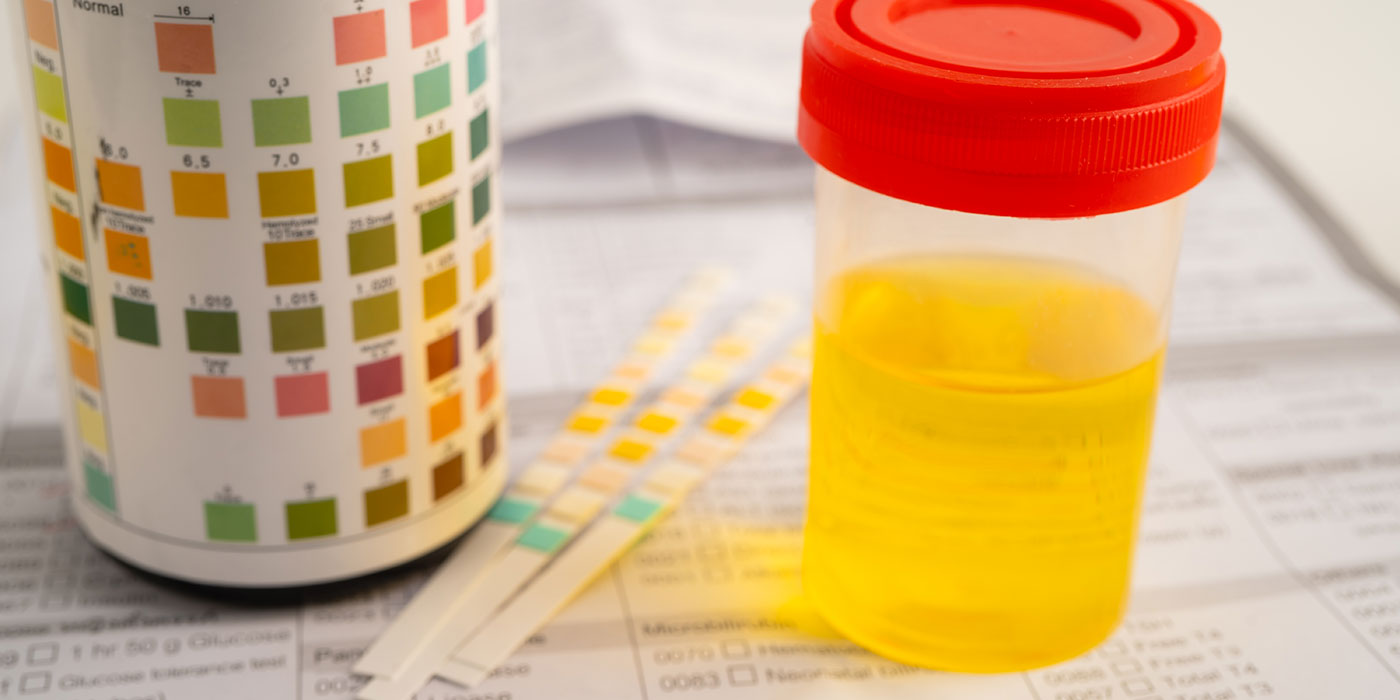
Urine testing represents one of the most frequently employed methods for detecting evidence of tramadol use. Tramadol and its primary metabolite O-desmethyltramadol are typically detectable in urine for approximately 1 to 4 days after an individual’s last use.[5]
Depending on the type of urine test administered, it may be looking for tramadol alone or both tramadol and its metabolites. Data provided by Mayo Clinic Laboratories indicate that approximately 30% of the tramadol consumed is eliminated unaltered in urine, while approximately 60% is eliminated in urine as various metabolites, including N-desmethyltramadol and O-desmethyltramadol [6].
Therefore, even if an individual no longer feels the effects of tramadol, they may still receive a positive test for tramadol. This situation also illustrates that the presence of a drug can depend on the laboratory method used for analysis as well as the cut-off limits established by each respective laboratory.

How Long Will Tramadol Remain in My Blood?
Typically, blood testing has a relatively short window for detecting a drug compared to urine testing. Due to the fact that tramadol’s half-life is measured in terms of hours, blood tests are generally best suited for establishing evidence of recent or present use versus past use.
In many instances, blood tests may detect the presence of tramadol for approximately 24 to 48 hours, depending on factors such as dosage strength, formulation, frequency of consumption, liver function and kidney function, and the sensitivity of the analytical test being utilized.
While blood testing is less commonly used than urine-based testing in many workplace or outpatient environments, it may be utilized for medical emergencies or forensic purposes when evidence of recent exposure is necessary.
How Long Will Tramadol Remain in My Saliva?
Saliva testing (or oral fluid testing) generally provides evidence of recent drug use. In many cases, saliva testing may establish evidence of recent tramadol exposure for approximately 1 to 2 days. However, similar to all forms of testing mentioned thus far, the timeframe may be influenced by the specific test being utilized, the amount of medication used, and the interval since last consuming the medication.
One advantage of utilizing saliva testing is that collecting a specimen is non-invasive compared to blood testing and more difficult to alter than urine testing. One disadvantage of saliva testing is that not all oral fluid-based panels contain testing for tramadol. Thus, whether or not tramadol will appear in a test result depends on what type of substances were tested for on the panel.
How Long Will Tramadol Remain in My Hair?
Hair testing offers the longest general timeframe for detection of a substance. A typical 1.5-inch segment of hair is utilized to evaluate an individual’s exposure to drugs over a time frame estimated at around 90 days. Similar to other types of testing methods (urine, blood, and saliva), hair testing is unable to determine what day a particular substance was consumed.
Unlike urine, blood, and saliva testing, hair testing is less concerned with very recent drug use and instead tends to demonstrate patterns of exposure over longer periods of time. Studies have assessed tramadol exposure via hair testing; however, variations exist among studies due to differences in hair length, collection methods utilized by laboratories conducting the analysis, and whether or not testing for either tramadol or its metabolites occurred.
Treatment Options for Tramadol Addiction
At Epiphany Wellness, we provide individualized treatment for people struggling with tramadol use, painkiller dependence, and co-occurring mental health concerns. Treatment begins with a personalized intake assessment that considers physical health, mental health, substance use, and individual recovery needs.
If tramadol use, painkiller misuse, cravings, withdrawal symptoms, or opioid dependence have become difficult to manage, you can contact our admissions team to discuss treatment options, verify insurance coverage, and determine an appropriate next step.
Frequently Asked Questions About How Long Tramadol Will Remain Detectable in Your System
Are you or a loved one struggling with Pain Killers?

Schedule a Free and Confidential Consultation with Epiphany Wellness
 609-710-9423
 info@epiphanywellness.com